
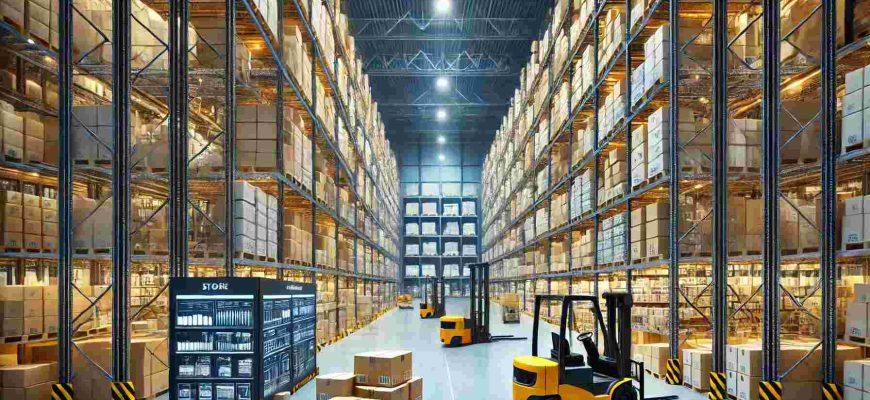
For many ecommerce businesses, warehouse automation feels like the natural next step once order volumes begin increasing. Manual workflows become difficult to manage, fulfillment errors rise, and operational teams face increasing pressure during peak demand periods.
At this stage, businesses often invest in automation technologies expecting them to solve scalability challenges almost immediately. Conveyor systems, barcode scanning, automated picking workflows, warehouse robotics, and process automation tools are introduced to improve speed and efficiency.
Initially, results often look promising. Fulfillment speeds improve, labor dependency decreases, and operational visibility becomes stronger.
But then something unexpected happens.
Despite automation investments, many ecommerce businesses still struggle with scaling operations efficiently. Fulfillment bottlenecks continue appearing. Inventory coordination problems remain unresolved. Order delays still happen during sales spikes. Operational teams continue relying on manual interventions to maintain workflow stability.
The issue is not that warehouse automation fails. The issue is that many businesses automate warehouse activities without redesigning the broader operational system around them.
This distinction is becoming increasingly important as ecommerce fulfillment complexity grows.
Automation Solves Movement, Not Coordination
One of the most common misconceptions about warehouse automation is assuming that faster warehouse movement automatically creates scalable fulfillment operations.
In reality, automation primarily improves execution speed. It helps warehouses move products faster, reduce repetitive manual work, and improve process consistency.
However, ecommerce fulfillment complexity extends beyond warehouse movement itself. Businesses must also coordinate:
- Inventory allocation across channels
- Order prioritization during demand surges
- Multi-location fulfillment decisions
- Real-time inventory synchronization
- Returns processing
- Carrier selection and shipping workflows
- Omnichannel order orchestration
These are coordination challenges, not simply movement challenges.
A warehouse may process orders faster operationally, but if order routing logic, inventory allocation, and fulfillment prioritization remain fragmented, scalability problems persist.
This is why businesses increasingly realize that automation alone is not enough. Operational coordination matters just as much as operational speed.
Why Ecommerce Fulfillment Complexity Is Growing Faster Than Warehouse Efficiency
Modern ecommerce operations are fundamentally more complex than traditional retail fulfillment models.
Several trends are accelerating this complexity simultaneously:
Omnichannel Commerce
Businesses now fulfill orders across websites, marketplaces, social commerce platforms, retail stores, and wholesale channels simultaneously.
Higher Customer Expectations
Consumers increasingly expect same-day or next-day delivery, accurate order tracking, and consistent fulfillment experiences regardless of channel.
SKU Expansion
Product catalogs continue growing as businesses diversify offerings and expand categories.
Distributed Inventory Networks
Inventory is often spread across multiple warehouses, fulfillment centers, and third-party logistics partners.
Seasonal Demand Volatility
Promotional campaigns and marketplace events create sharp order spikes that warehouses must absorb quickly.
In these environments, fulfillment efficiency depends less on isolated warehouse speed and more on how effectively systems coordinate operational decisions in real time.
This is where many businesses encounter scaling limitations despite investing heavily in warehouse automation technologies.
Why Automation Without Orchestration Creates New Bottlenecks
Interestingly, warehouse automation can sometimes expose operational weaknesses more clearly rather than eliminating them entirely.
When warehouse execution speeds improve, coordination problems elsewhere in the fulfillment process become more visible.
For example:
- Orders may enter fulfillment queues faster than inventory updates synchronize
- Picking efficiency may improve while order allocation logic remains inefficient
- Automated workflows may process incorrect inventory data more quickly
- Warehouse throughput may increase while shipping coordination becomes constrained
In other words, automation amplifies operational dependencies.
This is why businesses increasingly recognize the importance of integrating warehouse automation software with broader fulfillment coordination systems instead of treating warehouse automation as an isolated operational upgrade.
Automation performs best when operational decision-making systems evolve alongside physical warehouse processes.
The Role of Order Orchestration in Scalable Fulfillment
As ecommerce operations become more complex, order orchestration is becoming one of the most important operational capabilities businesses can develop.
Order orchestration refers to how businesses coordinate:
- Which warehouse fulfills each order
- Which inventory pool should be prioritized
- How orders are split or consolidated
- Which fulfillment workflows take priority
- How inventory availability updates across channels
This is where order management software becomes strategically important.
Modern order management systems function as coordination layers connecting inventory visibility, warehouse execution, sales channels, and fulfillment logic together.
Rather than simply processing incoming orders, these systems help businesses make intelligent operational decisions dynamically.
For example, an advanced order management platform can help businesses: - Route orders to the most efficient fulfillment location
- Balance inventory across warehouses automatically
- Prevent overselling during high-demand periods
- Prioritize urgent or high-value orders
- Coordinate inventory updates across marketplaces in real time
Without this orchestration layer, even highly automated warehouses can experience operational instability because fulfillment decisions remain fragmented.
Why Scalability Depends on Operational Synchronization
One of the defining characteristics of scalable ecommerce businesses is synchronization.
Smaller businesses often rely heavily on reactive operational management. Teams manually intervene when problems appear. Inventory adjustments happen through spreadsheets. Warehouse teams compensate for inefficiencies through experience and informal coordination.
At larger scales, this becomes increasingly unsustainable.
Scalable operations require synchronized systems where:
- Inventory updates continuously across channels
- Orders are routed dynamically
- Warehouse workflows adjust automatically
- Fulfillment priorities remain visible in real time
- Operational bottlenecks are identified early
Warehouse automation contributes to this environment, but it cannot create synchronization independently.
This is why businesses increasingly focus not just on automating physical workflows, but on integrating operational intelligence across the fulfillment ecosystem.
Why Many Businesses Automate Too Narrowly
Another common challenge is that businesses often approach automation tactically rather than strategically.
Instead of redesigning fulfillment operations holistically, they automate individual warehouse activities separately.
For example, businesses may automate:
- Picking workflows
- Barcode scanning
- Packing stations
- Inventory counting
- Conveyor systems
These improvements certainly increase operational efficiency. But if underlying coordination systems remain disconnected, businesses continue facing: - Inventory imbalances
- Delayed order routing
- Overselling risks
- Warehouse congestion during spikes
- Inconsistent fulfillment performance
This creates a situation where operational speed improves without achieving true operational scalability.
The businesses scaling most effectively today are those integrating automation, inventory coordination, and order orchestration together as a unified operational strategy.
Why Fulfillment Flexibility Is Becoming More Valuable Than Raw Speed
Interestingly, many ecommerce businesses initially focus heavily on maximizing fulfillment speed. But over time, operational flexibility often becomes even more important.
This is because ecommerce demand conditions constantly change. Businesses must adapt quickly to:
- Sudden sales spikes
- Regional demand shifts
- Marketplace campaigns
- Inventory shortages
- New fulfillment locations
- Expanding product catalogs
Rigid automation systems can sometimes struggle under changing conditions if fulfillment coordination remains inflexible.
Integrated operational systems provide greater adaptability because businesses can adjust fulfillment logic dynamically without rebuilding warehouse workflows entirely.
This flexibility increasingly defines long-term operational resilience.
The Future of Ecommerce Fulfillment Is Intelligent Coordination
The next phase of ecommerce fulfillment will likely depend less on isolated warehouse automation and more on intelligent operational coordination.
Businesses are moving toward ecosystems where:
- Inventory systems communicate continuously with fulfillment systems
- Warehouse automation adapts dynamically to order conditions
- Order orchestration platforms optimize fulfillment decisions in real time
- Operational visibility extends across the entire supply chain
In this environment, warehouses become part of a larger operational intelligence network rather than standalone fulfillment units.
The companies that scale most effectively will likely be those capable of synchronizing execution speed with operational decision-making.
Conclusion
Warehouse automation has become an essential part of modern ecommerce fulfillment. But automation alone does not guarantee scalability.
As ecommerce operations grow more complex, businesses must coordinate inventory visibility, warehouse execution, and fulfillment decision-making simultaneously. Without operational synchronization, even highly automated warehouses can struggle under increasing demand complexity.
By integrating advanced warehouse automation software with intelligent order management software, ecommerce businesses can move beyond isolated efficiency gains and build fulfillment ecosystems capable of scaling consistently, flexibly, and sustainably.
In modern ecommerce, operational success is no longer defined by how quickly warehouses move products. It is increasingly defined by how intelligently the entire fulfillment operation works together.


